
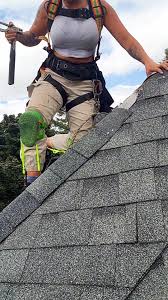
If you’re running a roofing business today, you already know the reality: homeowners don’t knock on doors anymore. They search Google. Whether they’re looking for emergency leak repairs, complete roof replacements, or storm damage assessment, your potential customers are typing queries into their phones right now, and they’re finding either you or your competitors. SEO for roofing companies isn’t optional: it’s the difference between thriving and barely surviving. The stakes are high because roofing is one of the most locally competitive industries online. Homeowners make snap decisions based on search visibility, reviews, and trust signals, often within seconds of landing on a site. Unlike expensive paid ads where you hemorrhage money with every click, SEO generates organic rankings that keep working 24/7 without draining your budget. We’ve helped roofing contractors across Greece and internationally capture first-page Google rankings and more than double their lead flow through proven white-hat optimization. In this guide, we’ll walk you through the exact strategies that work in today’s hyper-competitive roofing market, from local dominance tactics to technical foundations that search engines reward. Whether you’re a single-crew operation or managing multiple crews across several cities, these tactics will show you how to build an unstoppable organic presence.
Why SEO Is Critical for Roofing Businesses today
Let’s be direct: roofing is a search-driven industry. The moment a homeowner’s roof starts leaking or a storm damages their shingles, they pull out their phone and search. They don’t wait for yellow pages or hope a truck drives by with your name on it. They search “roof repair near me” or “emergency roofer [city name]” right now.
At Divramis, our SEO for roofers team has spent over a decade helping roofing companies, contractors, and local home-service businesses climb Google’s rankings with white-hat strategies, transparent reporting, and measurable lead growth.
SEO is critical for roofing businesses because the homeowners searching for your services are in active buying mode. They’ve already decided they need help: they’re just deciding who to call. If your website doesn’t appear on page one of Google, you’re invisible to them. And today, with AI-powered search results reshaping how information surfaces, being invisible means your competitor wins the contract.
Unlike pay-per-click advertising, where every click costs money, SEO generates sustained organic visibility. A well-optimized roofing website works like an employee who never sleeps, it keeps attracting qualified leads month after month without ongoing per-click costs. We’ve seen roofing contractors cut their customer acquisition costs by 60–70% after moving from pure PPC reliance to integrated SEO strategies.
The digital landscape today is unforgiving. Homeowners make decisions within seconds. They check Google reviews, verify credentials, and scan websites for trust signals, all before picking up the phone. If you’re not ranking for the keywords they’re actually searching, you don’t exist to them. Meanwhile, your competitors who’ve invested in SEO are capturing those leads daily.
Here’s what makes SEO even more critical now: mobile dominance. The majority of roofing searches happen on mobile devices, people literally search while standing in their yard looking at storm damage. If your website isn’t mobile-optimized, loads slowly, or has poor user experience, Google will bury you. The algorithms have evolved to ruthlessly penalize poor mobile performance, especially in service industries like roofing where proximity and speed matter.
The bottom line is straightforward. Today, roofing SEO isn’t a nice-to-have marketing tactic. It’s the foundational strategy that separates thriving contractors from struggling ones.
The Local Search Advantage for Roofing Contractors
Local SEO is the highest-priority strategy for roofing businesses, not just important, but absolutely essential. Here’s why: roofing is fundamentally a local business. A homeowner in Athens doesn’t care if you’re the best roofer in Thessaloniki. They want someone who can arrive quickly, understands local weather patterns, and works within their neighborhood.
Since 82% of roofing searches happen on mobile devices and typically include location-based queries, contractors must optimize for local visibility above all else. Think about it: most people search “roofer near me” or “roof repair in [city name],” not generic industry terms. Search engines understand this and prioritize proximity, relevance, and credibility when delivering local results.
The two highest-converting visibility points for roofers are Google’s Map Pack, those three local business listings that appear below the map on search results, and Local Service Ads (Google Guaranteed placements at the top of results). Ranking in the Map Pack alone can triple your qualified leads compared to organic links further down. Why? Because homeowners looking for roofing services trust Google’s local verification system, and the proximity information makes it obvious who can reach them fastest.
Local search also works in your favor because the competition is geographically fragmented. Yes, roofing is competitive, but you’re competing locally, not globally. A well-optimized Google Business Profile and strong local signals can push you past larger companies that haven’t invested in geographic optimization.
Google My Business Optimization for Roofing Services
Optimizing your Google Business Profile is non-negotiable for local dominance. This single tool is often the first thing a homeowner sees when searching for roofing services, and it directly influences whether they call you or click to a competitor.
Start with the fundamentals. Your primary category must be set to “Roofing Contractor” with secondary categories matching your specific services, whether that’s “Roofer,” “Roof Repair Service,” or “Roof Installation Service.” Google’s matching algorithm looks at these category tags to determine relevance.
Next, define your service area precisely. Don’t claim you serve “all of Greece” if you only operate in three cities. Inaccurate service area claims hurt credibility and can trigger manual penalties. Instead, list the specific cities and neighborhoods where you actually work.
Individual roofing services listed on your profile boost visibility for service-specific searches. Instead of just having “Roofing Services,” list “Roof Repair,” “Roof Replacement,” “Storm Damage Repair,” “Leak Detection,” and so on. Each service listing creates additional indexing opportunities.
Your business description should be written for humans first, search engines second. Don’t keyword-stuff descriptions. Instead, write compelling copy that explains why homeowners should choose you, your years of experience, certifications, warranty offerings, and local reputation. Google’s AI evaluates whether descriptions are genuinely helpful.
Read more: Twenty-one web design tips for a site that actually converts
Photo uploads matter more than most contractors realize. Aim for weekly uploads showing different roof types you’ve completed, crews at work, before-and-after transformations, and seasonal weather preparedness content. Profiles with consistent photo activity gain higher map visibility and trigger stronger AI trust signals.
Respond to every single review, positive and negative. This tells Google (and potential customers) that you’re engaged and professional. A business that ignores reviews signals that it doesn’t care about customer feedback. Seasonal posts and weather-related updates also boost profile activity and relevance.
Building Local Citations and Directory Listings
Local citations are mentions of your business name, address, and phone number (NAP) on relevant directories and websites. They establish business credibility and consistency across the internet. When homeowners and search engines see your business listed consistently across multiple directories, especially industry-specific ones for roofing, trust increases.
Consistency is the key metric. If your business name is listed as “John’s Roofing” in one directory, “Johns Roofing Service” in another, and “John Roofing Solutions” on a third, search engines can’t confidently link these to your business. This inconsistency actually damages your local rankings. You want perfect NAP consistency across every listing.
Priority directories for roofers include Google Business Profile (already covered), Yelp, Apple Maps, local chamber of commerce listings, industry directories specific to roofing, and aggregator sites that compile contractor information. Getting listed on high-authority local business directories signals to Google that you’re a legitimate, established business in your area.
The secondary benefit of citations is direct customer contact. Homeowners often find contractors through these directory listings directly, creating leads independent of your website. From an SEO perspective, though, the primary value is the trust signal and local relevance boost citations provide to your Google rankings.
Keyword Research and Strategy for Roofing SEO
Effective keyword research is the foundation of roofing SEO strategy. Too many roofing contractors make the mistake of targeting generic, high-volume keywords that don’t convert. They chase “roofing” or “roof repair,” which have massive search volume but are so broad that searcher intent varies wildly. Some people are casually researching. Some are comparing prices. Some want educational content. Only a fraction are ready to hire.
Instead, target high-intent local queries that homeowners actually search when they have an immediate need. The sweet spot for roofing SEO is location-specific service keywords. These have lower search volume than generic terms, but they’re packed with purchase intent. A homeowner searching “emergency roof leak repair in Athens” is far more likely to call you than someone searching just “roofing.”
Strategic keyword targeting for roofing contractors includes:
Primary competitive keywords like “roofing company,” “roofing contractor,” and “roofer” paired with your city or service area. These have meaningful search volume (often 5,000–20,000 monthly searches in competitive markets) and demonstrate commercial intent.
Location-specific combinations are your bread and butter. Keywords like “roof repair in [city],” “emergency roofer [neighborhood],” and “shingle replacement [region]” are exactly what homeowners search when they need you now. These keywords are less competitive than generic terms but far more valuable.
Service-specific terms like “hail damage repair,” “new roof installation,” “roof inspection,” and “leak detection” let you capture homeowners looking for specific solutions. These often have lower volume but exceptional conversion rates.
We recommend creating a master keyword list that combines location, service, and intent modifiers. This list becomes your roadmap for content creation, on-page optimization, and technical structure. A well-researched keyword strategy prevents you from chasing vanity metrics (high search volume) while ignoring actual business impact (qualified leads).
Read more: Eleven SEO trends that still move the needle today
Long-Tail Keywords That Convert for Roofers
Long-tail keywords are the secret weapon that most roofing contractors overlook. These keywords typically have lower search volume than head terms but deliver highly targeted traffic that’s ready to convert into actual customers.
Examples include “shingle replacement cost in [city],” “leak repair in [city], [state],” “residential roofing contractor in [area],” and “emergency roof repair [neighborhood].” These keywords address the specific problems homeowners are facing right now. They’re not researching roofing as an industry. They’ve got water dripping into their bedroom, and they need a solution today.
Why do long-tail keywords convert better? Because they’ve eliminated the browsing phase. Searcher intent is crystal clear. Someone typing “how much does a new roof cost” is still researching. Someone typing “new roof installation Athens, emergency same-day” is ready to call. The specificity of long-tail keywords creates a high-intent audience.
From an SEO perspective, long-tail keywords are also tactically easier to rank for. You’re competing against fewer websites, and Google rewards relevance. If your entire page is laser-focused on “leak repair in [city],” you’ll rank faster than trying to dominate generic “roofing” terms alongside hundreds of competitors.
We recommend building content specifically around long-tail keywords: service pages targeting specific repairs, location pages for multi-city campaigns, and blog content addressing seasonal issues. A page titled “Roof Leak Repair in Athens: Same-Day Emergency Service” is far more valuable than a generic “Roofing Services” page that tries to be everything to everyone.
The strategic combination of long-tail keywords across your website creates a content moat. Instead of competing on a handful of generic terms, you’re dominating dozens of specific, high-converting searches. This distributed keyword strategy is far more sustainable and profitable than chasing a few ultra-competitive head terms.
On-Page SEO for Roofing Websites
On-page SEO is where you tell search engines and homeowners exactly what your pages are about. The five critical on-page elements require optimization on every page of your roofing website.
Title Tags are the blue clickable headlines in search results. They’re your first impression. A title like “Professional Roofing Services” is weak. A title like “Roof Repair in Athens | 24/7 Emergency Service” is powerful. Include your primary keyword, city name, and a unique selling proposition. Keep titles under 60 characters so they don’t get cut off in search results.
Meta Descriptions are the gray text snippets below titles in search results. Google doesn’t use these for ranking, but they influence click-through rates. Write compelling summaries that highlight your unique value, emergency response times, warranty guarantees, certified expertise, local reputation. A meta description should make homeowners want to click your link instead of a competitor’s.
Header Tags (H1, H2, H3, etc.) create logical content hierarchy and help search engines understand page structure. Every page should have one H1 tag that matches or closely aligns with your title. Use H2 and H3 tags to organize supporting content naturally. These headers shouldn’t be keyword-stuffed, they should guide readers through your content while incorporating relevant keywords organically.
Image Alt Text describes images using relevant keywords. Search engines can’t see images the way humans do, so alt text is how you tell them what’s in pictures. Instead of “photo1.jpg,” use “roof replacement project in Athens showing new shingles installed.” This serves dual purposes: it helps search engines understand images, and it’s required for accessibility compliance.
URL Structure should be short, descriptive, and keyword-rich. Instead of “example.com/?p=1234,” use “example.com/roof-repair-athens” or “example.com/emergency-leak-repair.” Short, readable URLs are easier to share, look more professional in search results, and help search engines understand page content.
Beyond these technical elements, meeting search intent is absolutely crucial. If you’re targeting “roof repair costs,” your page should actually address pricing and cost factors. If homeowners search “emergency roofer near me,” your page should emphasize availability, response times, and local service. Content that perfectly matches what people are actually searching for ranks higher and converts better.
Read more: Fifteen Google SEO ranking factors that still matter
Quality content is the final on-page factor. Write for humans, not search engines. Use clear language, address homeowner concerns directly, include trust signals (certifications, years in business, customer testimonials), and organize content with short paragraphs and plenty of white space. Long, dense text blocks drive visitors away, especially on mobile devices where most roofing searches happen.
Technical SEO Essentials Every Roofing Contractor Should Know
Technical SEO ensures search engines can properly crawl, index, and rank your website. It’s the behind-the-scenes infrastructure that determines whether Google can even access your content in the first place. Neglect technical SEO, and no amount of keyword optimization will save you.
HTTPS/SSL certificates are non-negotiable. If your website runs on HTTP instead of HTTPS, Google treats it as unsecured. Search engines penalize unsecured sites in rankings and show warning messages to visitors. Every roofing website must run on HTTPS. This is table-stakes, not optional.
Site speed directly impacts rankings and user experience. Pages should load in under 2.5 seconds. When a homeowner’s page takes 5+ seconds to load, they bounce and visit a competitor. Google’s algorithms reward fast sites because they create better user experience. For roofing websites with image-heavy galleries, optimize images aggressively, enable lazy loading, and use a content delivery network (CDN) to serve content from servers geographically close to visitors.
Mobile-first indexing is critical for roofing. Since 82% of roofing searches happen on mobile devices, Google primarily indexes and ranks the mobile version of your website. If your mobile site is slow, unresponsive, or has poor user experience, your rankings will suffer regardless of desktop performance. Test your website on various mobile devices and connection speeds. Ensure buttons are large enough to tap easily, text is readable without zooming, and navigation works intuitively.
Responsive design means your website automatically adapts to different screen sizes. Don’t use separate mobile and desktop versions, use responsive design that serves one codebase optimized for all devices. This approach is cleaner for search engines and easier to maintain.
Schema markup helps search engines understand your business data. Carry out LocalBusiness schema for your roofing company (including address, phone, hours), Service schema for your roofing services, and Review/AggregateRating schema for customer testimonials. Proper schema markup can result in rich snippets in search results, which boost click-through rates.
XML sitemaps tell search engines all the pages on your website so they can crawl and index everything. Create and submit your XML sitemap to Google Search Console. This is especially important for larger roofing websites with dozens or hundreds of location and service pages.
Internal linking helps spread authority throughout your website. Link from your homepage to important service pages and location pages. Link between related content (roof repair articles should link to leak detection pages, etc.). Smart internal linking creates a logical website structure that both users and search engines navigate easily.
Crawl errors and 404 pages should be monitored and fixed. Use Google Search Console to identify pages that can’t be accessed or return errors. Broken links frustrate visitors and waste search engine crawl budget. Fix or redirect broken pages promptly.
Building Authority Through Content and Backlinks
Authority is what separates roofing websites that dominate Google from those that struggle to rank. Search engines use authority as a major ranking factor: sites that Google considers authoritative and trustworthy rank higher than newcomers or low-authority sites, even when optimizing for the same keywords.
Authority is built through two primary mechanisms: quality backlinks and authoritative content.
Quality backlinks from reputable, relevant websites act like votes of confidence. When a respected industry publication, local news outlet, or roofing association links to your website, Google interprets this as a trust signal. Not all backlinks are equal, a link from a relevant, authoritative site is worth far more than links from random directories.
Read more: Seven SEO tactics that will only waste your time
Building backlinks for roofing requires strategy. You won’t naturally earn links from major publications just by existing. Instead:
- Pursue local partnerships (chamber of commerce, local business associations, supplier networks)
- Create newsworthy content (major project transformations, community service initiatives, certifications)
- Build relationships with local journalists and bloggers
- Get listed in reputable industry directories and review platforms
- Sponsor local events and community initiatives (and request links from organizers)
The key is earning links naturally through genuine value and relationships, not purchasing links or participating in link schemes, which violate Google guidelines.
Content authority comes from consistently publishing valuable, well-researched information. Service pages, location pages, and blog posts targeting roofing topics build authority and demonstrate expertise. When your website comprehensively covers roofing repair, replacement, storm damage, and maintenance topics, Google recognizes you as an authority in your field.
A holistic content strategy signals to Google that your site is the most relevant and trustworthy option in your service area. Instead of a thin website with three pages, you’re building a resource hub that homeowners turn to for roofing information and, when they’re ready to hire, naturally want to call.
Local Content Strategies That Generate Roofing Leads
Content must address specific customer problems and local needs. Generic roofing advice that could apply anywhere misses the mark. Instead, create content that’s locally relevant and highly specific to what homeowners in your area are actually dealing with.
Service pages should optimize for specific repairs and needs. Instead of one generic “Services” page, create dedicated pages for roof repair, roof replacement, emergency services, storm damage assessment, leak detection, gutter services, etc. Each page targets a specific search query and addresses a specific customer problem.
Write these pages as if you’re answering a homeowner’s urgent question. What should they expect during a roof inspection? How does emergency leak repair work? What’s the timeline for a roof replacement? What does your warranty cover? Address these questions directly and comprehensively.
Location pages are essential for roofing contractors serving multiple cities. Create pages for each neighborhood or city you serve: “Roofing Services in Athens,” “Roof Repair in Thessaloniki,” etc. These pages should include local information, local weather challenges, common roof types in the area, local building codes, that prove you understand the region.
Location pages allow you to rank for location-specific keywords without duplicating content across different URLs. A well-done location page feels authentic and locally relevant, not like a templated page with the city name inserted.
Blog content addressing seasonal issues, maintenance tips, and roofing education builds authority and captures long-tail keywords. Post about spring roof inspections, winter weather preparation, storm damage prevention, gutter maintenance, and signs you need roof repairs. This content attracts homeowners early in the decision journey and establishes your expertise.
Targeting long-tail keywords through location and service combinations creates conversion-focused content that attracts homeowners ready to hire. A blog post titled “5 Signs Your Athens Roof Needs Repair Before Winter” attracts local, qualified traffic far better than generic “Roofing Tips” content.
Measuring SEO Success and ROI for Roofing Services
You can’t improve what you don’t measure. Too many roofing contractors invest in SEO but never track whether it’s actually generating leads and revenue. They obsess over keyword rankings without asking: “Are these rankings turning into phone calls and booked jobs?”
SEO success for roofing companies must be measured through business outcomes, not vanity metrics.
Read more: Choosing a reliable CTR manipulation tool for rankings
Qualified lead generation is the primary metric. Track how many leads come through your website, specifically from organic search. Use phone call tracking (many services automatically log calls from organic searches) and website analytics to identify which keywords and pages drive leads. A thousand visitors from organic search means nothing if none of them convert into qualified leads.
Booked jobs and call volume from organic search are the ultimate ROI indicators. How many roofing contracts have you won because of organic visibility? What’s the revenue impact? If organic search generated three $5,000 roof replacement contracts last month, your SEO is working.
Budget expectations for effective roofing SEO typically range from $1,500 to $3,500 monthly for campaigns targeting multiple cities with consistent lead generation. This budget covers keyword research, on-page optimization, technical updates, content creation, local citations, and ongoing monitoring. Lower budgets may work for single-city, low-competition markets, but competitive areas require sustained investment.
The right SEO partner should demonstrate proven ability to generate qualified leads that convert into actual booked jobs. They should show you case studies with real numbers: X keywords ranked, Y leads generated, Z revenue produced. Any SEO company that focuses primarily on ranking positions without demonstrating revenue impact is missing the point.
Key metrics to track:
- Organic search traffic (month-over-month growth)
- Keyword rankings for priority terms
- Lead volume from organic search
- Lead quality and conversion rates (visits → calls → booked jobs)
- Customer acquisition cost from organic vs. paid advertising
- Revenue generated from organic leads
- Local search visibility (Map Pack rankings, Local Service Ads impressions)
Use Google Analytics and Google Search Console to monitor these metrics. Set up conversion tracking for phone calls and form submissions. Create a simple spreadsheet tracking leads from organic search and their outcomes. This data-driven approach proves SEO’s value and guides optimization decisions.
SEO isn’t a quick fix. Expect 3–6 months to see meaningful results in competitive markets. But, once you establish authority and rankings, the leads keep coming with minimal ongoing effort. This long-term sustainability is why SEO’s ROI often exceeds paid advertising, you’re building assets (rankings, authority, content) that generate returns indefinitely.
Conclusion
Dominating local Google rankings and doubling your roofing lead flow isn’t mysterious or complicated. It requires systematic execution across local optimization, keyword strategy, technical foundations, content authority, and honest measurement.
The roofing contractors winning today aren’t the ones spending the most on advertising. They’re the ones who’ve invested in SEO. They’re ranking on page one for the keywords homeowners search. Their Google Business Profiles are polished and active. Their websites load fast, rank on mobile, and convert visitors into calls. They’re building authority through quality content and strategic partnerships.
You don’t need to master every aspect of SEO yourself. But you do need to understand the fundamentals so you can evaluate SEO providers, measure results, and hold them accountable. Or, if you prefer to focus on what you do best, actually roofing houses, partner with an experienced SEO team that understands the roofing industry and delivers results measured in booked jobs, not just rankings.
At divramis.com, we’ve helped roofing contractors across Greece and internationally capture first-page rankings and increase organic traffic by 1200% through proven, white-hat optimization tailored to their specific markets. If you’re serious about building a sustainable source of roofing leads through organic search, we’d like to discuss your opportunity.
Start this week: optimize your Google Business Profile, research the long-tail keywords homeowners in your area are actually searching, and audit your website for the technical issues that hold you back. These foundational steps will position you for the next level of roofing SEO success.
Read More
Discover more from Casinos Lots Greece:
- GDPR
- Professional Escort SEO Services: Proven Strategies To Dominate Search Rankings
- The Ultimate Guide to Claiming Canadian Casino Bonuses on the Internet
- My Greece Tours Review – A Trusted Way to Experience Authentic Greece?
- Casino Slots Greece: Ο Πλήρης Οδηγός Για Φρουτάκια Και Κουλοχέρηδες Στην Ελλάδα